How to Make a Tier List: The Complete Step-by-Step Guide
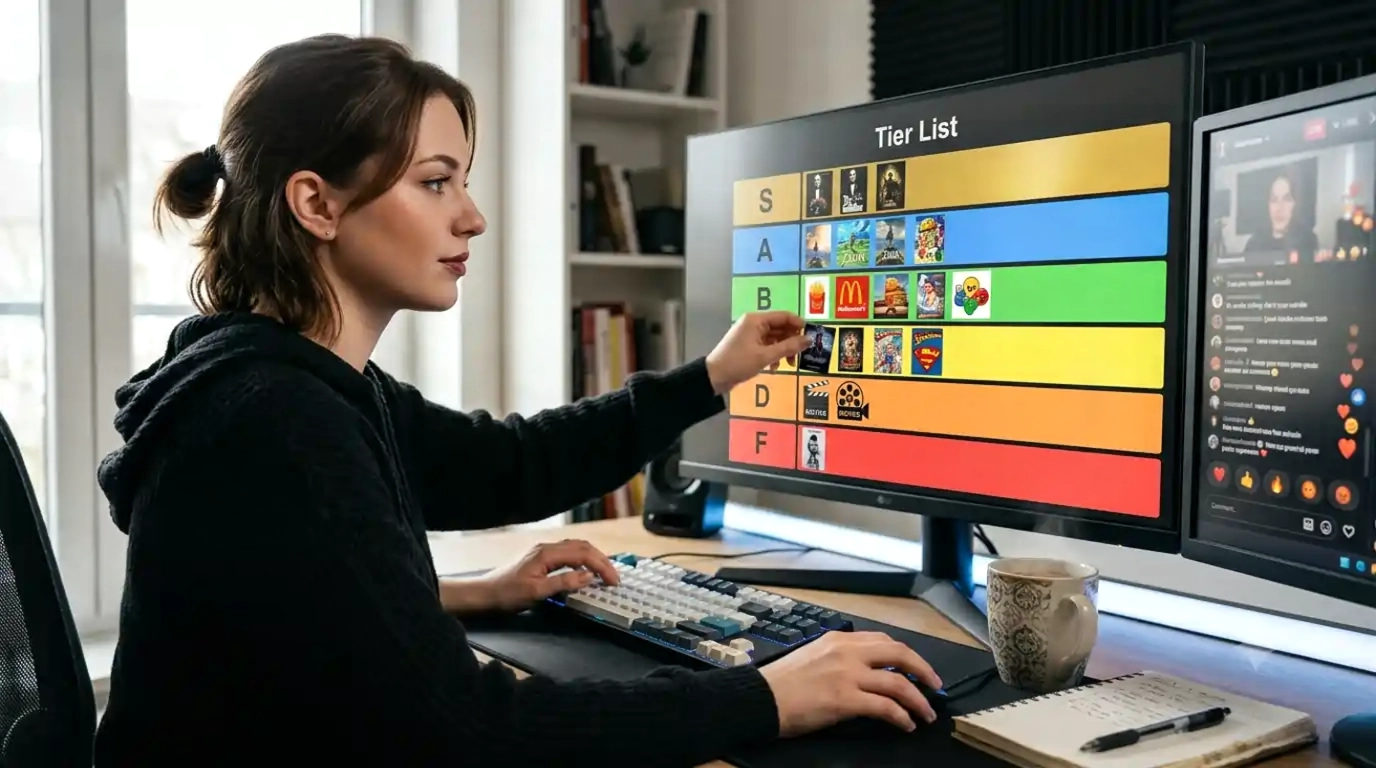
You've seen them everywhere: on Reddit, TikTok, YouTube, and Discord. Someone drops a tier list ranking every Pokémon, every fast food chain, and every Marvel movie, and suddenly the whole comment section is on fire. Some people agree. Most don't. Everyone has an opinion.
That's exactly what a good tier list does. It starts a conversation.
This guide walks you through how to make a tier list from scratch, what the tiers mean, how to pick your topic, how to rank fairly, and how to share it so people actually engage with it. Whether you're making your first-ever tier list or you've made hundreds, there's something here worth knowing.

What Is a Tier List, and Where Did It Come From?
A tier list is a simple ranking system. You take a group of items, characters, games, restaurants, movies, whatever, and sort them into rows from best to worst. Each row is called a tier and gets a letter label.
The format started in fighting game communities in the late 1990s and early 2000s. Players would rank characters based on how strong they were in competitive play. The top fighters went into the S tier. The rest fell into A, B, C, D, and sometimes F tiers below. The word "S" comes from the Japanese grading word "saikou" (最高), which means "the best" or "the highest."
From there, it spread everywhere. Anime fans used it to rank characters. Food lovers used it for fast food chains. Sports fans used it for athletes and teams. Now it's one of the most shared content formats on the internet, clean, visual, instantly debatable, and endlessly fun to make.
Understanding the Tier System, S, A, B, C, D, F
Before you start ranking, it helps to know what each tier is actually supposed to represent. Here's the standard system most people use:
S Tier: The Best of the Best. S tier is reserved for the truly exceptional. If something makes S tier, it means there's almost nothing better in its category. Don't inflate this tier by putting too many things in it, if everything is S tier, nothing is. A strong S tier has two to four items at most.
A Tier: An excellent A tier is for things that are genuinely great but fall just short of S. Most top-quality items land here. Calling something A tier is still a strong compliment, it means it's among the best, just not untouchable.
B Tier: Good, Solid, Reliable. B tier is the comfortable middle ground. These items are good. They do what they're supposed to do. They're not exciting, but they're not bad either. Think of it as "worth your time."
C Tier: Average C-tier items are fine. They work. But there are better options available, and most people would go for something higher if given the choice. Not an insult, just honest.
D Tier: Below Average. Something in D tier has real problems. It might still have a use case in specific situations, but broadly speaking, it underperforms. Most people would skip it.
F Tier: The Worst F tier is reserved for things that genuinely fail, broken, disappointing, or just not worth anyone's time. Use it sparingly. If everything ends up in F tier, your list loses credibility fast.
One important note: These tiers are flexible. Some people add an SS or SSS tier above S for truly legendary items. Others drop the F tier and end at D. Some add custom tier names entirely: "God Tier," "Trash Tier," "Mid," "Fire," "Nah." The standard S-to-D system is a starting point, not a rulebook.
How to Choose a Topic
Step 1: Pick Your Topic and Keep It Focused
The most common mistake people make when building a tier list is choosing a topic that's too broad. "All video games ever made" is not a tier list; it's an impossible task. "Every Street Fighter 6 character ranked for beginners" is a tier list. The narrower your scope, the more useful and shareable your list becomes.
Ask yourself three questions before picking a topic:
- Do I actually know enough about this to rank it fairly? A tier list is only as good as the knowledge behind it. If you're ranking Genshin Impact characters but you've only played for two weeks, your list will reflect that. Either narrow your scope to what you know well, or do the research first. Readers notice when rankings don't hold up.
- Is there genuine debate here? The best tier lists spark disagreement. If everyone agrees on the ranking, there's no conversation to start. Pick topics where reasonable people have different opinions, those lists get shared, argued over, and referenced long after you post them.
- Is the scope manageable? A list of 10 to 30 items is the sweet spot. Fewer than 10 items, and there's not much to rank. More than 50, and the list becomes overwhelming to read and build. If your topic has hundreds of items, break it into a series, "Best Pokémon by Generation," instead of "Every Pokémon Ever."
Popular tier list topics to get you started:
- Gaming: characters, weapons, maps, abilities, patch rankings
- Anime: characters, series, arcs, fight scenes
- Fast food: chains, menu items, limited-time offerings
- Sports: players, teams, kits, seasons, managers
- Music: albums, songs, artists, eras
- Movies and TV: films, episodes, villains, sequels
- Pokémon: starters, legendaries, evolutions, types
Setting Your Criteria
Step 2: Decide What "Good" Actually Means Before You Rank Anything
This is the step most people skip, and it's why so many tier lists fall apart under scrutiny. Before you drag a single item into a tier, write down your criteria. What makes something S tier in your list? What sends it to D?
Without clear criteria, your rankings become gut feeling dressed up as analysis. That's fine for a casual list shared with friends, but if you want your tier list to be taken seriously, or to hold up when people push back, you need defined rules.
Example: Fast Food Tier List Criteria
- Taste consistency across locations
- Value for money
- Availability of options for different diets
- Speed of service
- How often menu quality drops
Example: Fighting Game Character Tier List Criteria
- Damage output relative to difficulty
- Combo potential
- Defensive options
- Match-up spread against the rest of the roster
- Viability at high-level play
Example: Anime Series Tier List Criteria
- Writing quality and pacing
- Character development
- Animation quality
- Rewatchability
- Cultural impact
Your criteria don't need to be complicated. They just need to exist. Write them down somewhere, even in your tier list description, so readers know what they're looking at.
Building the Tier List (The Actual How-To)
Step 3: Build Your Tier List on TheTierMaker
Now the practical part. Here's how to actually build your tier list using TheTierMaker, the fastest free tier list maker online, no account needed to start.
Step 3a: Open the Tier List Maker
Go to thetiermaker.com. You don't need to sign up to start. Hit the button and you're straight into the editor.
You have two options from here:
- Use a template: Browse hundreds of ready-made templates across gaming, anime, Pokémon, sports, fast food, Marvel, music, and more. Templates come pre-loaded with images for that topic, so you can start ranking immediately without uploading anything.
- Build from scratch: If your topic doesn't have a template, or you want full control, start with a blank tier list. You'll upload your own images or add text labels for each item.
Most people start with a template and customize from there. It's faster, and the images are already formatted correctly.
Step 3b: Set Up Your Tiers
The default setup gives you S, A, B, C, and D tiers. You can change these to anything you want:
- Rename any tier label (click on the tier name to edit it)
- Add more tiers if you need them (some topics need an F tier or a "Mid" row)
- Remove tiers you don't need (a simple three-tier list works well for short topics)
- Change the color of each row to make the visual pop
Don't overthink the setup. Get your tiers in place, then start ranking.
Step 3c: Rank Your Items
This is the part that takes the most time, and that's fine. Drag each item from the pool at the bottom into the tier it belongs in. Don't try to rank everything perfectly on the first pass. Place items roughly where you think they belong, then come back and adjust.
A few tips that make a noticeable difference:
- Start with the extremes. Put your obvious S-tier items in first, then your obvious F or D-tier items. Everything else will fall into place more naturally once the anchors are set.
- Don't overpopulate the S tier. One of the most common mistakes is being too generous with S-tier. It dilutes the whole list. If you find yourself putting eight things in S tier, reconsider; at least half of them probably belong in A.
- Think in comparisons, not absolutes. Instead of asking "Is this S-tier?", ask "is this better or worse than the other items already in that tier?" Comparison is easier than judgment in a vacuum.
- Leave the contentious ones for last. If you're stuck on where something goes, skip it and come back. Often, once the rest of the list takes shape, those hard cases become obvious.
Step 3d: Customize the Visual
Before you share, make the list look the way you want it. On TheTierMaker you can:
- Upload your own custom images for any item
- Add or edit text labels on items
- Adjust tier row colors and sizes
- Add a title to your tier list
- Write a short description explaining your criteria
That last point matters more than most people realize. A brief description of why you ranked things the way you did transforms a tier list from a static image into the start of a conversation. Even two or three sentences is enough.
Step 3e: Save and Share
Create a free account to save your tier list permanently. Once saved, you get a shareable link that goes anywhere, Twitter, Discord, Reddit, TikTok, YouTube community posts, wherever your audience is.
If you want to see what the community thinks, post it with a strong opinion in the caption. "This is the only correct Smash Ultimate tier list" gets more replies than "Here's my tier list." Disagreement drives engagement.
Common Tier List Mistakes
What Separates a Good Tier List from a Forgettable One
Most tier lists that don't get traction make the same handful of mistakes. Here's what to avoid:
Putting too many things in S tier: S tier means the best of the best. If your S tier has ten items in it, it stops being meaningful. Be brutal with S tier. Make it feel exclusive. Readers respect a list that doesn't hand out the top ranking freely.
Not explaining your criteria: "I just feel like it" is not a ranking system. You don't need to write an essay, but one sentence explaining what "S tier" means in your context goes a long way. It also gives you something to defend when people disagree.
Ranking things you don't actually know: This is especially common in gaming tier lists. Someone ranks every character in a game they've played for 20 hours based on how the characters look rather than how they perform. Experienced players spot this immediately, and your credibility takes a hit. Stick to what you genuinely know.
Making the topic too broad: "Best movies ever made," is not a tier list; it's an argument waiting to collapse under its own scope. Narrow your topic until it's something you can rank with real confidence.
Never updating it: Tier lists in competitive games go stale fast. Characters get buffed and nerfed. Meta shifts. If you publish a tier list and never update it, it becomes misinformation over time. Either update it regularly or be clear about the patch or date it reflects.
Tier List Ideas
Tier List Ideas Across Every Category
Stuck on what to rank? Here are some of the most popular tier list topics right now, pick one, build it, and share it.
Gaming: Smash Ultimate tier list, Marvel Rivals characters, Genshin Impact tier list, League of Legends champions, Tekken 8 characters, Honkai Star Rail, Brawl Stars brawlers, Pokémon starters, Elden Ring weapons, Valorant agents
Anime: Best anime series of all time, Demon Slayer characters, One Piece arcs, Naruto vs Boruto, Best anime openings, Top anime villains, Best sports anime
Fast Food: Every fast food chain ranked, Best McDonald's menu items, Fast food breakfast ranked, Best value fast food, Worst fast food items, Most overrated fast food
Sports: World Cup kits, Premier League managers, Best Champions League, NBA players this season, NFL quarterbacks ranked, Best footballers of all time
Music: Best albums of the decade, Taylor Swift albums ranked, Drake discography tier list, best hip-hop albums, Best pop albums 2026, Worst Grammy winners
Movies & TV: Marvel Cinematic Universe films ranked, Best Christopher Nolan films, Breaking Bad episodes, Every Star Wars film ranked, Best horror movies by decade
Everything else: Pokémon types, Best cars under $30K, Programming languages, Coffee chains, Pizza brands, Dog breeds, Countries to visit
How to Make Your Tier List Go Viral
How to Share Your Tier List So People Actually Engage With It
Building the list is only half the job. Getting people to react, share, and argue with it is the other half. Here's what actually works:
Post a strong opinion in the caption, not a question. "Do you agree with my tier list?" gets ignored. "This is the definitive Smash Ultimate tier list and I will not be taking questions" gets replies. Strong takes get engagement. Soft takes get silence.
Post it where the community lives. Gaming tier lists belong on Reddit gaming subreddits and Discord servers for that specific game. Anime tier lists belong on r/anime and dedicated character communities. Fast food lists belong anywhere food is discussed. Don't post a gaming tier list on a cooking forum.
Time it to a current moment. A tier list posted right after a major game patch, a new season drop, a tournament, or a viral moment gets far more traction than one posted randomly. Tier lists are reactive content, they perform best when they respond to something people are already talking about.
Make it slightly controversial. A tier list where everyone agrees on every ranking is boring. The best tier lists have at least one or two placements that people feel are clearly wrong. Those placements are where the comments come from.
Keep the visual clean. Before you share, look at your tier list from a distance. Is it easy to read at a glance? Are the images consistent? Is the layout clean? A messy tier list gets dismissed before anyone reads the rankings.
Frequently Asked Questions
Ready? Start Your Tier List Right Now
You've got the topic. You know your tiers. You have a system for ranking.
The only thing left is to actually build it. TheTierMaker is free, works on every device, and takes about 30 seconds to get started.